
Culture and Traditions
A living reflection of the Rumeli migrant heritage in Anatolia.
Rumeli Heritage in Anatolia
Since its founding, Mesudiye village has vividly preserved its Rumeli (Balkan) migrant culture. In 1922, Teacher Sapancalı H. Hüseyin Bey recorded that both women and men "still preserved the manner of speech and the clothing they had brought from Rumeli."
The word "muhâcir" is pronounced "macır" in the local dialect — even this small phonetic detail is a reflection of the village's Balkan roots in everyday speech.
Even in 1922 the villagers still preserved the manner of speech and clothing they had brought from Rumeli. The muhacir (macır) identity is the core cultural axis of the village.
The Rumeli Dialect and Its Language Features
The language of Mesudiye still bears the traces of Balkan Turkish. One of the most distinctive features is the "-es" suffix preserved in surnames. Common among Rumeli Turks, this patronymic suffix means "the sons of …" or "from the family of …"; the village surname Özşahines is a living example of it. This structure is not found across most of Anatolia and clearly documents the village's Deliorman–Silistre origins.
Beyond this, certain phonetic habits peculiar to Balkan Turkish persist in daily speech: the shortening of vowels ("macır" instead of "muhâcir"), the preservation of back-vowel harmony in its Rumeli form in some words, and the use of old Turkish words inherited from the Ottoman era. Even records dating to 1922 emphasise that both women and men "still preserved the manner of speech they had brought from Rumeli."
Cultural Heritage
The Muhacir Oven (Macır Oven) and Its Loaf
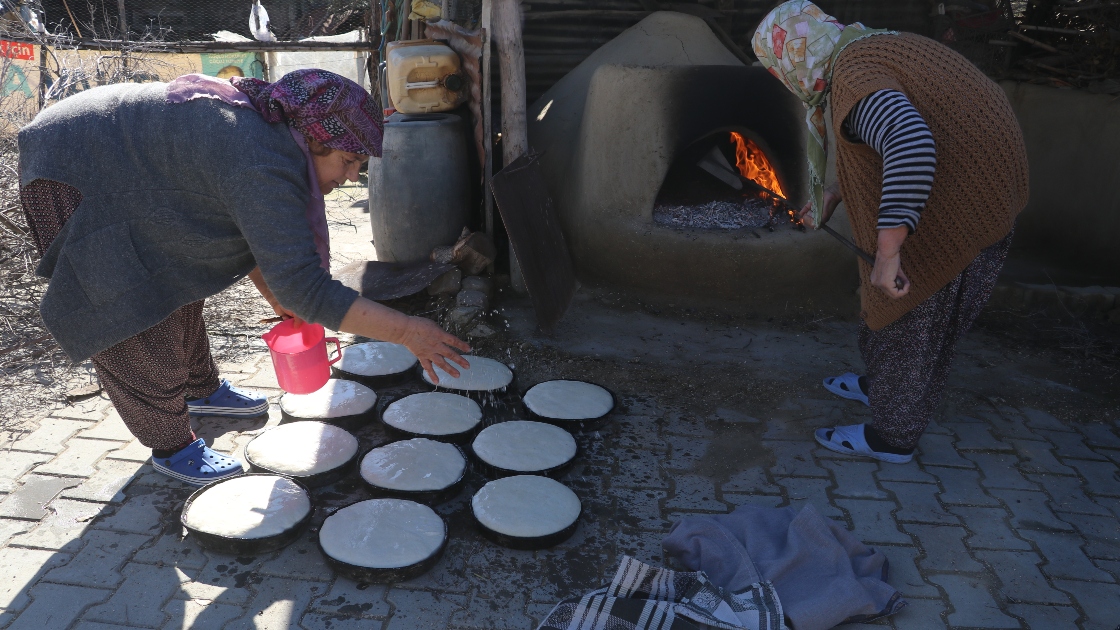
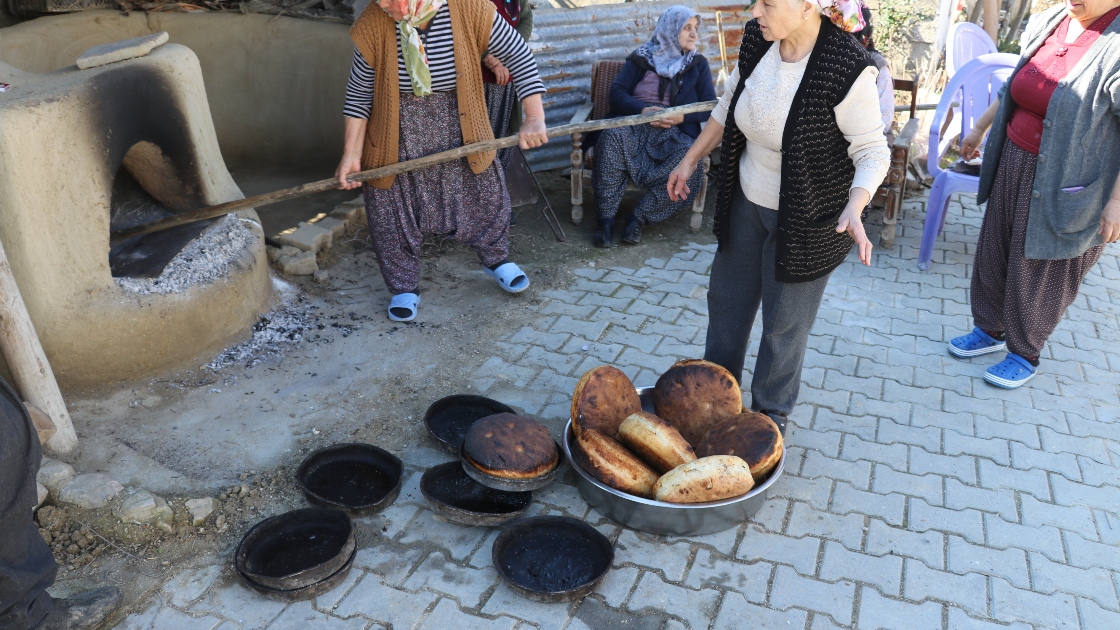
The traditional bread-baking method that the Balkan migrants carried with them from Rumeli.
Building the Oven
- Height
- ~1 metre
- Diameter
- ~2 metres
- Base
- Built on a seki (platform) from straw-mixed clay
- Dome
- Once dried, a domed structure finished with a four-finger-thick clay plaster
- Firing
- When fired, the plaster hardens to a ceramic-like consistency
Loaf quality: Stays fresh for many days without going stale
Tradition
Wedding Traditions
The Wedding Sequence
-
First evening: the women sing folk songs at the groom's home
-
Daytime: the groom's ceremonial shave to live saz music
-
Evening: the gift ceremony on kilims spread across the village square
-
The imam offers the blessing prayer
-
The young men parade the groom through the village with folk songs
The Groom's Attire
Traditional groom's costume
- Red fez
- White muslin headcloth
- Striped shirt
- Black şalvar (baggy trousers)
- Cepken (embroidered short jacket)
- White sash
The Bride's Attire
Traditional bride's costume
- Red fez adorned with jewels
- Turkish-work silver-thread çember (head veil)
- Çakma — a long entari of purple or red velvet embroidered with gold symbols
- Black gathered şalvar
Wedding Traditions in Detail
Mesudiye weddings were a two-day festivity reflecting all the richness of the Rumeli migrant tradition. The night before the wedding a henna night was held; as henna was applied to the bride-to-be's hands and hair, the women sang henna songs blended with laments. The henna was usually burned in a copper bowl and applied by the bride's mother or mother-in-law. The henna night was reserved for women alone; the men held their own celebration the same evening at the groom's home.
The bringing of the bride (gelin alma) ceremony was the liveliest moment of the wedding. Horsemen or carriage drivers sent by the groom's family would arrive at the bride's home; at the door there was haggling over tips and gifts. As the bride left her father's house, water was poured behind her — a wish that "may the place you go to be joyful, may your path flow as easily as water." Along the way the drum and zurna played, accompanied by Rumeli folk songs and dance tunes.
In the wedding music the drum and zurna formed an indispensable duo. Rumeli tunes were played to the accompaniment of the saz (bağlama), and people joined the halay line dance. While the women sang folk songs among themselves to the def (frame drum), the men danced köçek and zeybek figures in the square.
The wedding meals were like a shared table for the whole village. Meaty bulgur pilaf, yahni stew and soups were cooked in great cauldrons. Muhacir loaves were prepared in the oven as bread, and dizme was offered as dessert. The food was prepared collectively by the women of the village; this custom turned the wedding into a festivity not only of two families but of the entire village.
Flavours
Traditional Cuisine
A distinctive culinary synthesis where the Rumeli migrant tradition meets Anatolian ingredients.
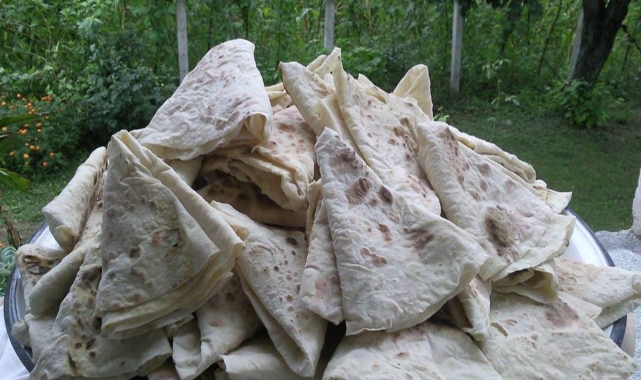
Muhacir somunu
BreadTraditional bread baked in the muhacir oven — stays fresh for many days
Dızmana
DishA Rumeli-origin pastry dish; minced meat or cheese is layered between thinly rolled phyllo and baked
Kırma
DishA soup-like, brothy dish made from cracked wheat — a winter staple
Sarı burma
DishA börek made by rolling phyllo into a coil and cooking it in butter
Dizme
DessertA traditional dessert prepared by layering walnuts and sugar between thin sheets of phyllo
Traditional Recipes
Muhacir Somunu
Ingredients
- 1 kg flour
- 1 packet dry yeast
- 1.5 teaspoons salt
- Warm water (to consistency)
Method
- Knead the flour, yeast, salt and warm water into a soft dough with the consistency of an earlobe. Cover and leave to rise for 1 hour.
- Divide the risen dough into fist-sized pieces and roll each piece into a round loaf shape.
- Heat the muhacir oven (or a stone oven) thoroughly with wood; push the embers to the side and slide in the loaves.
- Bake for about 20–25 minutes until the tops are golden. The resulting loaf stays fresh for days without going stale.
Bulgur Pilavı
Ingredients
- 2 cups coarse (pilaf) bulgur
- 1 tablespoon tomato paste
- 1 onion (chopped)
- 3 cups hot water or meat stock
- Butter, salt, black pepper
Method
- Sauté the onion in butter until it turns pink, add the tomato paste and stir for another minute or two.
- Add the bulgur, sauté for a few minutes, then pour in the hot water or meat stock.
- Add salt and black pepper and cook over low heat until the liquid is absorbed (about 15–20 minutes).
- Turn off the heat and let it rest for 10 minutes. Serve as the headline dish of wedding feasts.
Dızmana
Ingredients
- Phyllo dough (flour, water, salt)
- Filling: minced meat or white cheese
- Onion, black pepper, salt
- Butter (for the top)
Method
- Knead the dough and divide it into pieces; roll each piece out thinly into a phyllo sheet with a rolling pin.
- Sauté the minced meat with onion (or crumble the cheese). Add the spices.
- Arrange the phyllo sheets in the tray, scattering filling between each layer. Drizzle butter over the top.
- Bake in a preheated oven until the top is golden (about 30 minutes). Serve hot.
Sport
Mesudiyespor Football Club
Management and Technical Staff
Squad
By regularly beating Karamanspor and Başakspor in the regional leagues, Mesudiyespor became the "feared nightmare" of its rivals. A small village team giving the giants such a hard time made both the players and all of Mesudiye proud.
Fan Culture
The villagers travelled to Karaman Kemal Kaynaş Stadium by hiring buses and minibuses, or by piling onto tractor trailers. Every match turned into a festival of solidarity etched into the village's collective memory.